
The Austin County Emergency Services District 1 (“ACESD 1”, or the “District”) was created by a majority vote of landowners. ACESD 1 is a local government unit that provides services to local landowners. It was created to provide a consistent funding every year dedicated to fire protection. The original intent was to spread the funding for emergency services among everyone within the District. The Ad Valorem Tax is spread evenly between all landowners in the District, according to the amount of property owned.
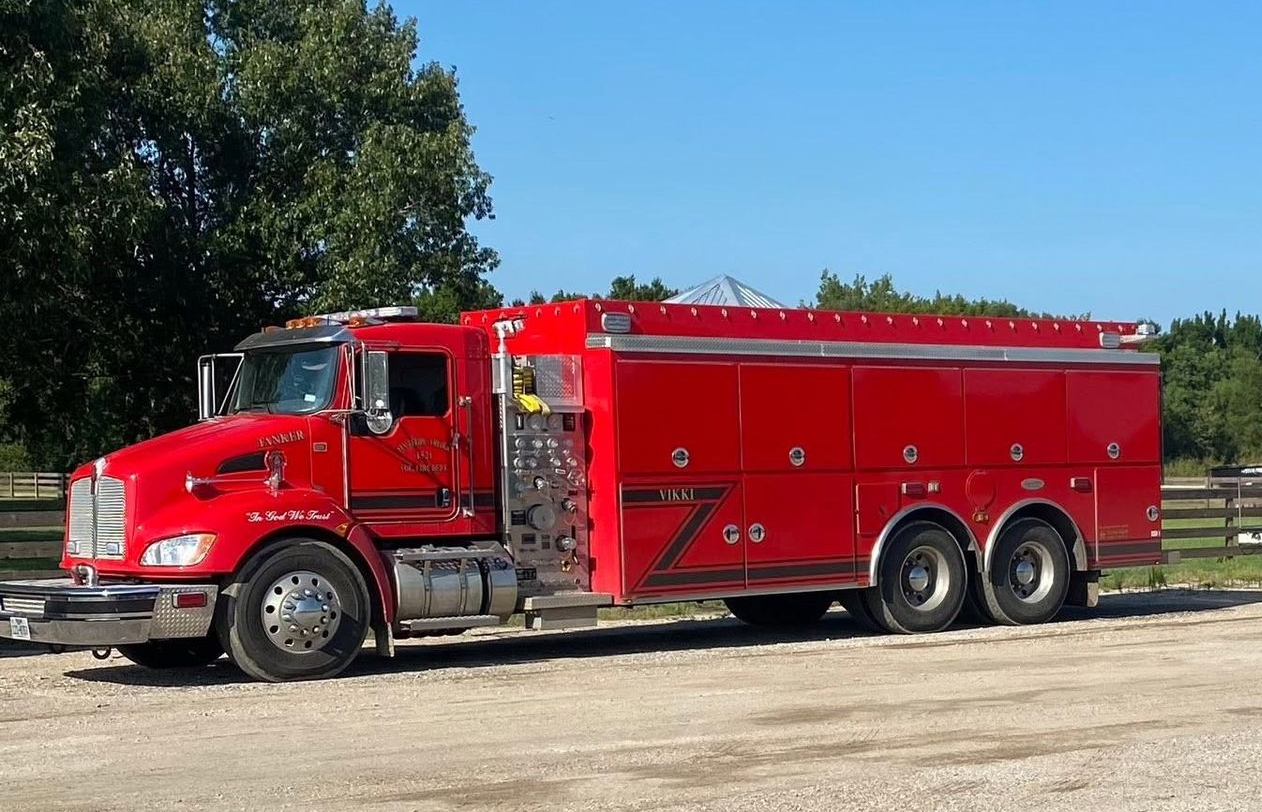
Water Tender (or tanker) is a specialized firefighting apparatus designed to transport large volumes of water to the emergency scene. Typically, between 1,000 and 4,000 gallons. Used in areas lacking a municipal water supply or fire hydrants. $300,000 to $700,000+. Where there are no hydrants, the Water Tender is King.
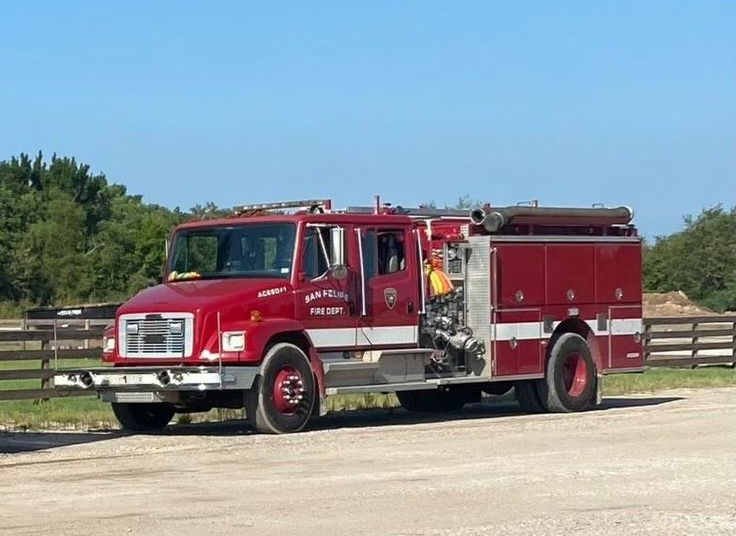
Engine (or pumper) – a Type 1 fire engine - is a primary emergency vehicle designed to transport firefighters, lay hose and pump water to extinguish fires. Arrives first at structural fires to initiate the primary attack, deploy hoses, and control the blaze. Budget friendly $350,000 - $550,000. Fully Equipped $900,000 - $1.2 million
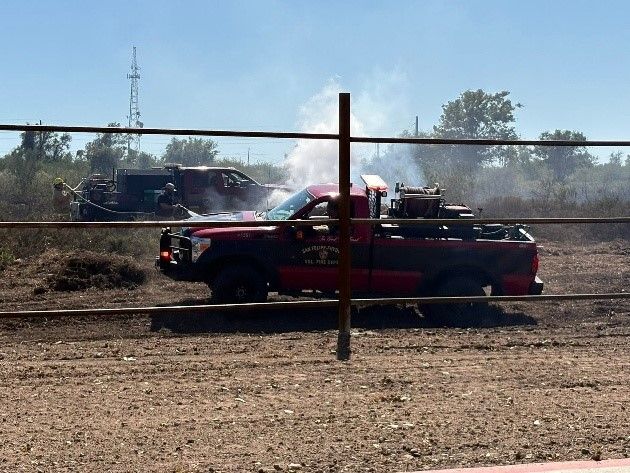
Brush Truck – a Type 3 fire engine - is a rugged, four-wheel-drive wildland fire engine built to navigate rough terrain and fight brush or forest fires. $150,000 - $350,000
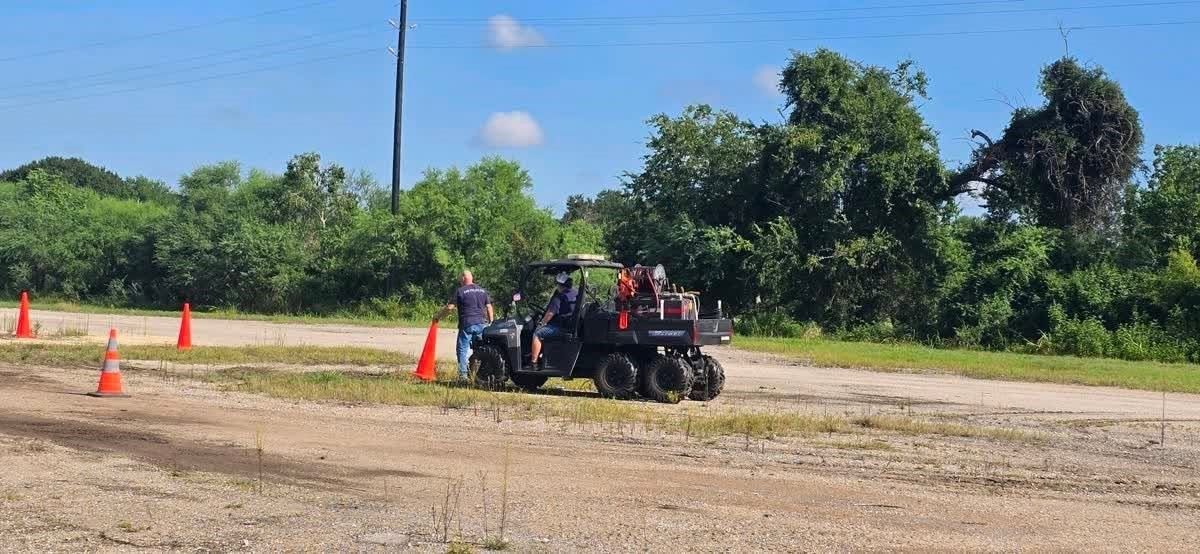
ATVs (all-terrain vehicle) and UTVs (utility terrain vehicles) for rapid off-road response, wildland firefighting, and remote search-and-rescue operations. Fighting brush and forest fires in areas where full-sized fire engines cannot fit. A basic unit is $30,000 - $45,000 with a basic 50 to100 gallon water tank and pump. Fully equipped $45,000 - $60,000.
Just as technology changes in the private sector, technology advances in the fire service as well. The equipment the SFFVFD uses is regularly enhanced following the National Fire protection Association (NFPA) standards. There is always the possibility of equipment being damaged during an emergency or training. This equipment must be replaced and comply with the latest standards.
As an industry standard, the typical life span for a fire engine is 15 years. If vehicles are not replaced on a systematic basis this can affect ISO ratings and develop an increase in the cost of vehicle maintenance and repairs.
An equipment replacement strategy requires establishing a lifecycle management agenda integrated into budget planning. A proactive replacement timeline ensures community safety while preventing catastrophic budget shocks.
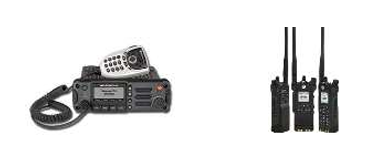
Communication
A Motorola Mobile APX radio mounted in the vehicle is $ $5,500 – $8,900 per unit for a new, multi-band (all-band), public safety radio.
Communication is critically important on a fire scene, from the first-arriving size-up of the fire until the fire is declared out. Good communication maintains the safety of every firefighter on scene
Fuel Cost
Higher diesel prices are creating higher financial pressure as the VFD works to keep emergency vehicles on the road while maintaining the same level of service.
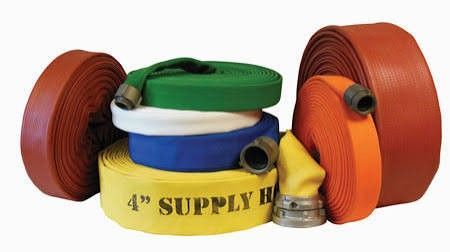
Hose is carried on all firefighting equipment. Hose is an item that suffers damage the most on a fire line. The cost of a length of hose depends on its diameter.
• One-inch hose is used on grass fires. A 100-foot length costs between $123 and $259 for standard single-jacket lightweight and forestry models.
• 1 ¾-inch hose is carried on all vehicles. This is the primary fire attack line. The cost of one 50-foot length is between $120 and $380 depending on the jacket type (single or double), and couplings.
• 2 ½-inch hose is carried on all vehicles. The cost of one 50-foot length is $275 to $350 depending on the jacket type (single or double) and couplings.
• 4-inch hose is carried on Engines and Water Tenders and used as supply lines from a water supply to an engine or when supplying another engine at a fire scene. The cost of one 100-foot length is $400 - $550 depending on jacket type and couplings.
For safety, industry standards strongly recommend a 10-year maximum service life guideline on fire attack lines. Fire hose naturally degrades over time even if it sits unused on an apparatus. Per NFPA 1962 standards, fire hoses must undergo a documented hydrostatic pressure test at least once every year.
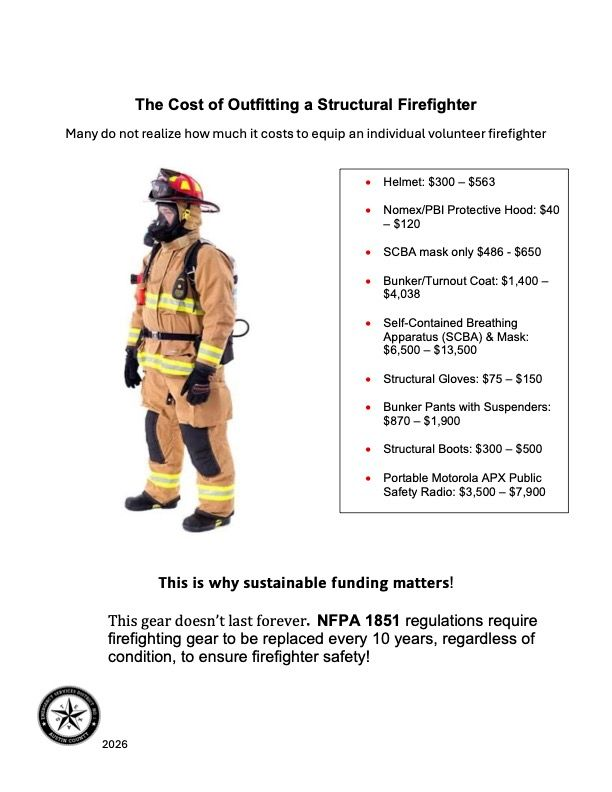
The San Felipe-Frydek Fire Department is 100% volunteer and depends on the support of the community to provide Fire and Rescue Services.
The support received from the community reflects directly on the level of service that can be provided by your Fire Department. The fire department volunteers are your neighbors. The same equipment that protects your family and property, protects their families and property.
WHAT IS AN EMERGENCY SERVICES DISTRICT (ESD)
List of Services
-
Notice About Tax RatesList Item 1
Here you can get information about public hearings and tax rates.
-
District MapList Item 2
ESD 1 manages Emergency services for the local Fire Department Response area
-
Local Fire DepartmentList Item 3
ESD 1 proudly supports EMS, and the fire services of the San Felipe/Frydek Volunteer Fire Department.